
Walking the path of reconciliation together.
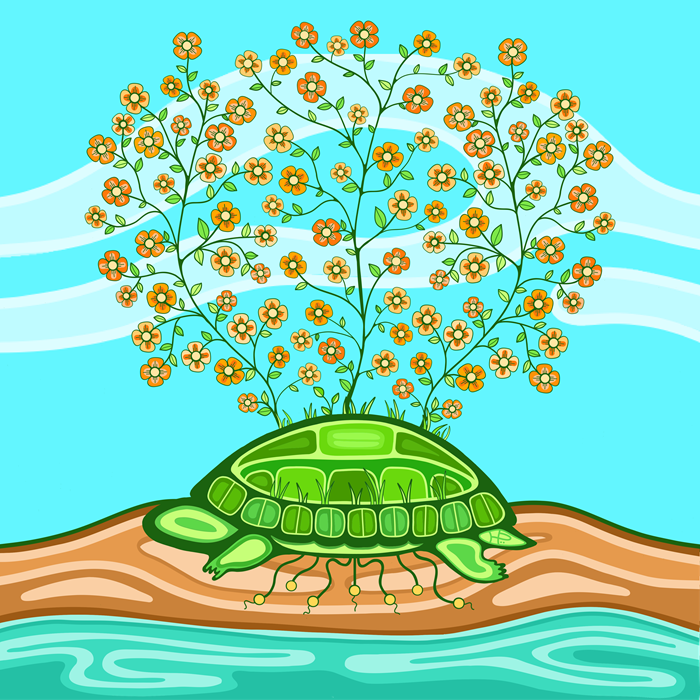
Illustration by Hawlii Pichette of Urban Iskwew
Every year on September 30, the National Day for Truth and Reconciliation asks us to pause, reflect, and remember. It honours the children who never came home from residential schools, as well as the survivors, families, and communities who continue to carry this trauma. It’s a day rooted in truth-telling, but also in an invitation: how do we, as settlers, take responsibility in ways that support real reconciliation?
A starting point is to ask what reconciliation actually means. According to the National Centre for Truth and Reconciliation (NCTR), it isn’t a single event or a checklist to complete. Instead, it’s an ongoing process of building and maintaining respectful relationships between Indigenous and non-Indigenous people. Reconciliation isn’t something we achieve and move on from. It’s living, evolving work.
The NCTR and the Truth and Reconciliation Commission outline some key elements that make reconciliation possible. First is awareness of the past: learning about the history and impacts of residential schools and other colonial policies. Then comes acknowledging harm: naming the suffering without minimizing it or turning away. From there, reconciliation asks for atonement—taking responsibility for the systems and behaviours that created harm. Finally, it requires action to change behaviour, in our personal lives, our communities, and our institutions.
This isn’t easy work. It asks us to face uncomfortable truths and take responsibility, instead of avoiding or rushing toward quick solutions. But it is also hopeful work. Like healing from trauma in therapy, reconciliation grows through truth, responsibility, and consistent care.
So what does this look like in practice?
It can begin with listening. Survivors and Indigenous leaders have been sharing their truths for decades. Our role is to truly hear them, without turning away, without rushing to solutions, and without expecting Indigenous people to carry the burden of educating us. Listening itself is an act of respect and acknowledgement.
Next we can be proactive about learning. Books, films, podcasts, and local events offer countless ways to deepen our understanding of colonial history and its ongoing impacts. Learning also means becoming more familiar with the land we live on and recognizing the Nations who have cared for it since time immemorial. This self-education helps shift the weight of responsibility from Indigenous communities back onto settlers.
Finally, reconciliation is a call to action. Responsibility comes to life when we support Indigenous-led initiatives, whether that’s mental health programs, language revitalization, or land stewardship. It also shows up when we question inequities in our communities, speak up against harmful stereotypes, and bring these conversations into our families, schools, and workplaces. Through action, reconciliation moves off the page and into our daily lives.
When we step into responsibility, something shifts. The helplessness of “I can’t change the past” becomes “I can shape how I live in the present.” That shift matters for our collective mental health, it helps reduce anxiety, builds connection, and gives our actions meaning.
Taking responsibility doesn’t erase the pain that was caused. It doesn’t make reconciliation easy or simple. But it does honour survivors, and it strengthens our own capacity to show up with compassion and courage. It acknowledges that while the past cannot be undone, the future is still ours to shape.
As September 30 approaches, if you identify as a settler, I invite you to reflect on what reconciliation looks like for you. Rather than a single moment in time, explore this process as a practice. One we return to again and again, with patience, humility, and a willingness to learn along the way.
Written for the Coast Reporter, On Mental Health (Sept 26, 2025)